Design Overview
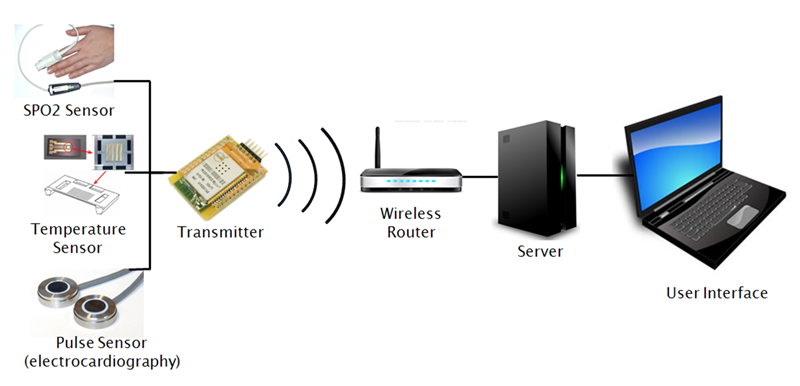
The project design can be broken down into two main parts: the patient monitoring system (hardware) and the database and user interface (software). The patient monitoring system takes input from thermometer, pulse oximeter and electrocardiography (ECG) sensors, which are non-invasive and relatively cheap to purchase. Although these sensors could be integrated wirelessly as a Body Area Network (BAN), power requirements limit the use of wireless transmission and result in the use of a localized wristband design. The sensors are connected to a Yellowjacket WiFi board which has the capability to process the signals and either store or transmit data depending on the availability of the patient's home WiFi network. Once the data is transmitted it is processed and stored in a database which can be accessed using a web-based interface at kailog.com. This website can be accessed by both patients and doctors, and can be used to monitor sensor data and store a patient's electronic health record (EHR).
A system overview is shown below (click for larger image).
Hardware Design
Three sensors have been implemented for the purposes of this project, and conform to the requirements that the biological measurement methods be completely non-invasive and comfortable for the end-user. Commonly used metrics include thermometry, electrocardiography and pulse oximetry (SPO2) and will be implemented using thermal, electrochemical and optical transducers respectively. These sensor signals are amplified and filtered using electrically safe and accurate operating conditions, then transmitted via wi-fi to the kailog servers, as shown in the figure below.
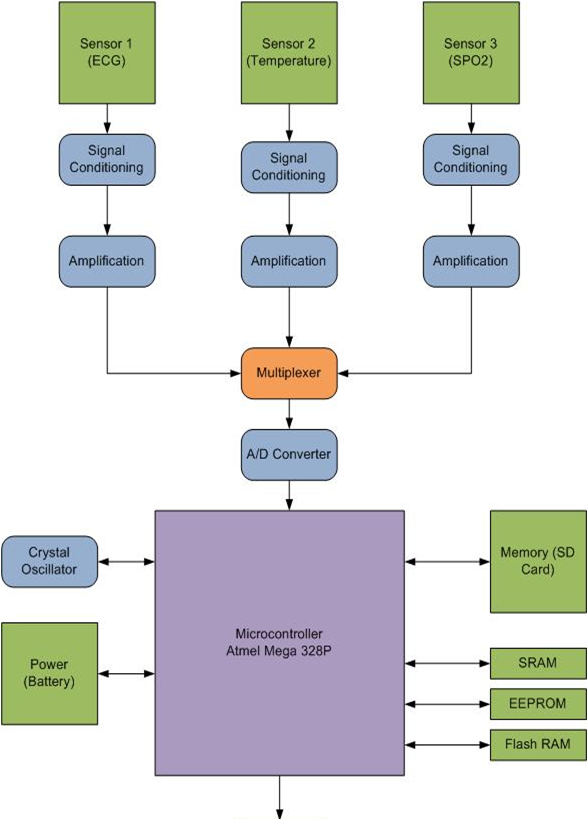
Putting it All Together: The software will include functions for sensor selection and sampling rate based on patient settings and/or data history. In addition, when the wireless network is not available, the software will automatically store data to the SD card. The device is specifically designed to be a home use only device, which means that the wireless network will be set to one network only. Thus when the patient is at home, the device should be continuously transmitting. Sensor sleep schedules and wireless transmission times will modified according the battery requirements.
Software Design
The software design can be split into two main areas: front end and back end design. Front end design consists of the software that is seen by the end user - such as the interface and charts. The back end design covers the server API and information processing which is done behind the scenes from the user perspective.
The first element in the back-end design is the web service which receives information from the device via an HTTP request, and authenticates by checking the username and password fields from the first lines of the http request. It also checks the medical device IP in the internal database to make sure the data is coming from an authorized device. The back end gathers the data sent from the medical device and converts the raw data into a more complex form by adding time-stamps and analyzing the raw data with previous information to perform calculations such as average heart rate, maximum heart rate, etc.
The analyzed data is then dumped into the database into the proper tables for each patient. The back end also triggers the proper push notifications to the front end to refresh the information displayed if any person is looking at the information at that time. The graphic below shows the flow of information in the back end.

Interface design is a particularly important aspect of any technology, since this is usually the part that consumers interact with the most. There are many aspects to a successful interface, with the first being functionality. However, a functional interface should also be intuitive, easy to use, accessible and look both professional and suited to its purpose. In this case the interface must also provide some sort of security (ie. login) as required by US and Canadian health information laws. A preliminary interface design is shown below (click for a larger version).
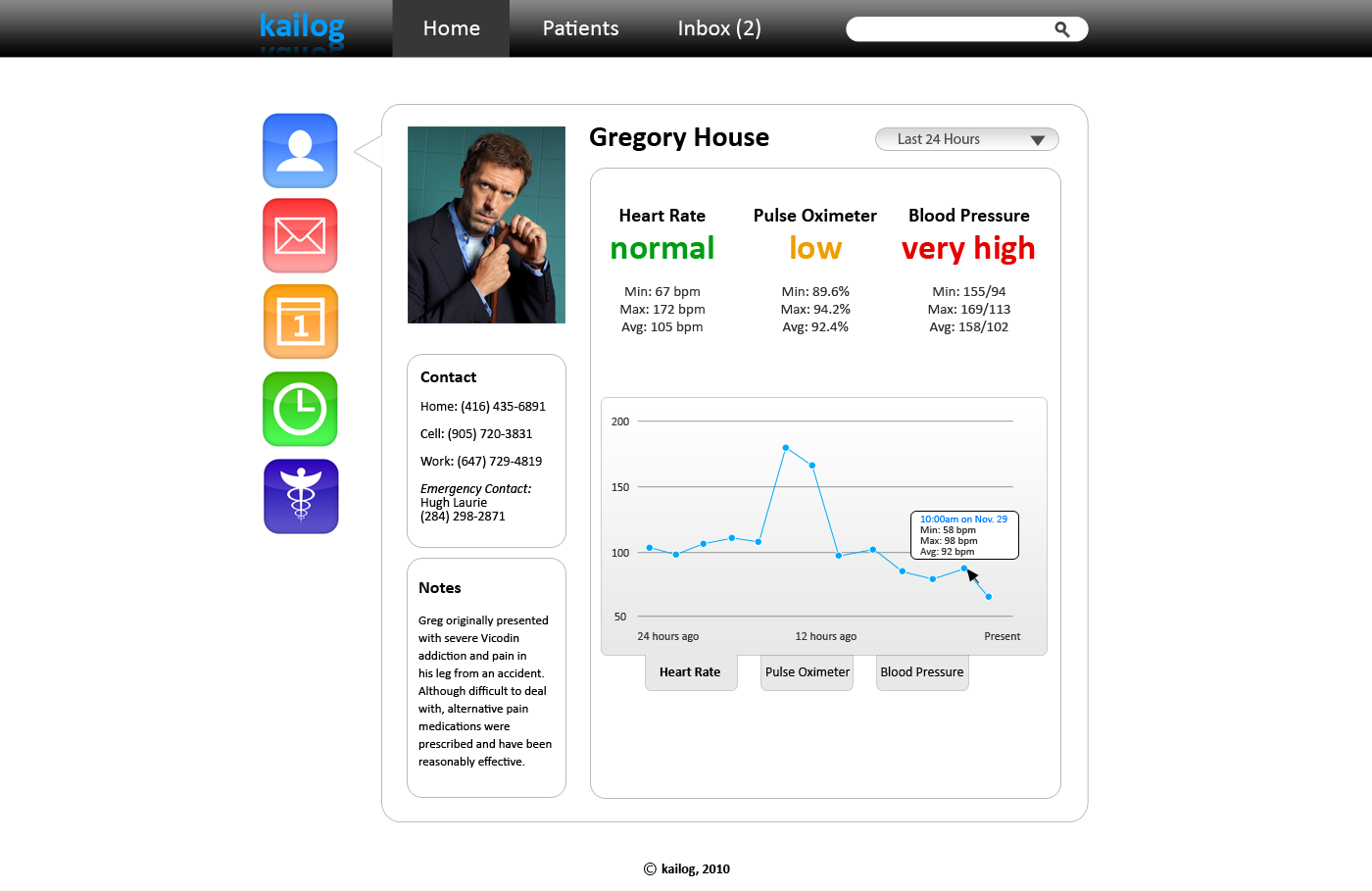
Putting it All Together: Both the front and back end must be designed to work efficiently and flawlessly as this is the aspect of the kailog device that sets it apart in the mind of the consumer. While the user may not realize the work done on the back end, they will experience the benefits of information processing and storage system and a functional and professional-looking web browser interface.