|
:: To Review:
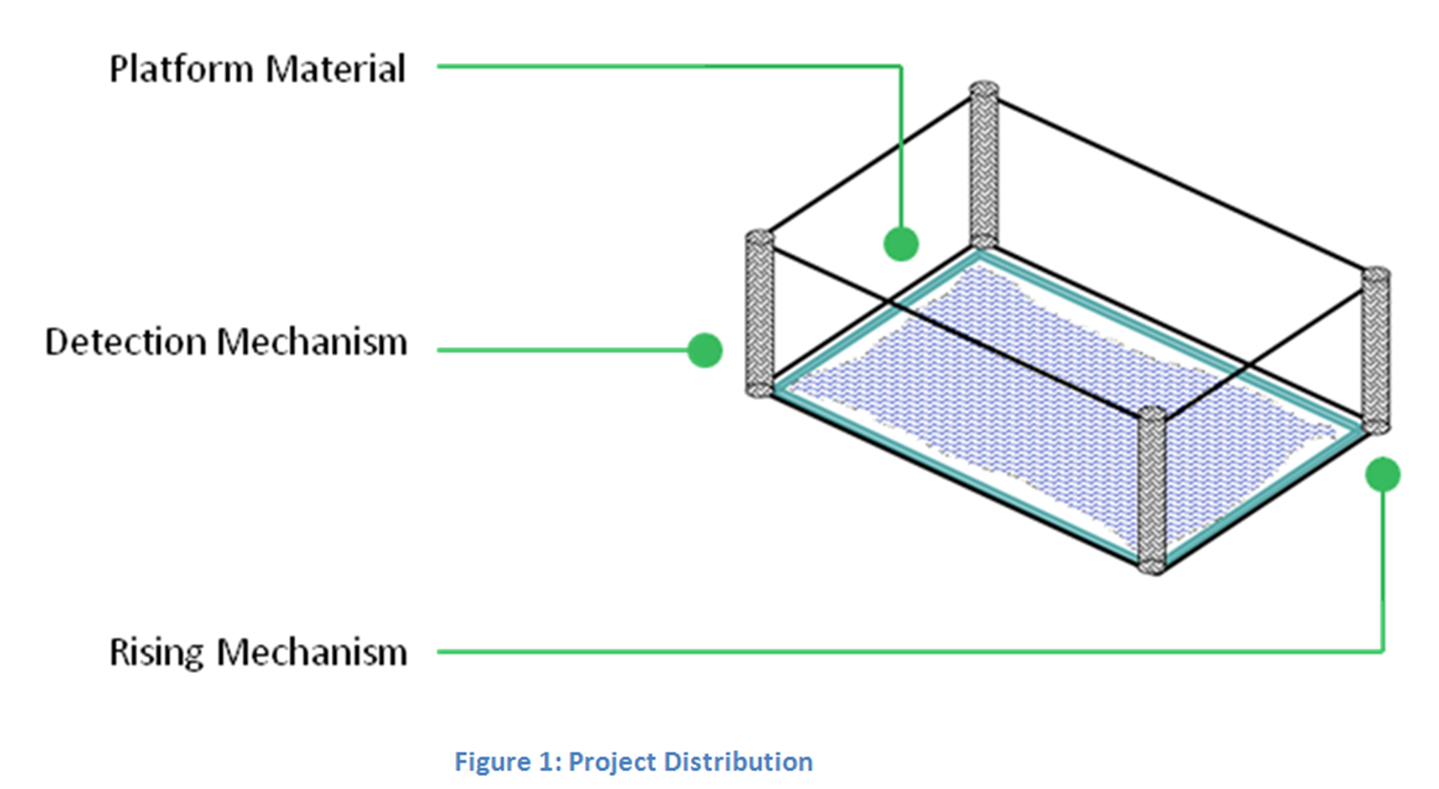
The goal of Pillar’s is to have an
integrated system that will identify,
detect, alarm,
locate, and respond to a drowning
event. Several criteria and constraints were developed, and
used to analyze the design alternatives and choose a final
design.
:: Design Criteria:
The design must be:
-
Safe and Reliable
-
Robust
-
Sustainable
-
An attractive solution
-
Cost Effective
:: Design Constraints:
The design must:
-
Successfully detect
an event in less than 10 seconds
-
Successfully
initiate and complete an automated response in less than
40 Seconds
-
Be water resistant
– The mechanism will be exposed to water and therefore
the detection and response mechanism should be water
resistant.
-
Have an operational
life span of 30 years – A back-yard pool has a life span
of approximately 30 years, according to a private pool
installation company, therefore requiring the mechanism
to have the same maximum lifespan.
-
Have a manual
emergency backup system – In case of a failure in the
system, the response mechanism can be initiated through
a manual emergency backup system.
-
Have a bystander
e-stop – If the mechanism is malfunctioning, it can be
stopped by a bystander using an e-stop button.
|